
When did every cafe become a corporate office?
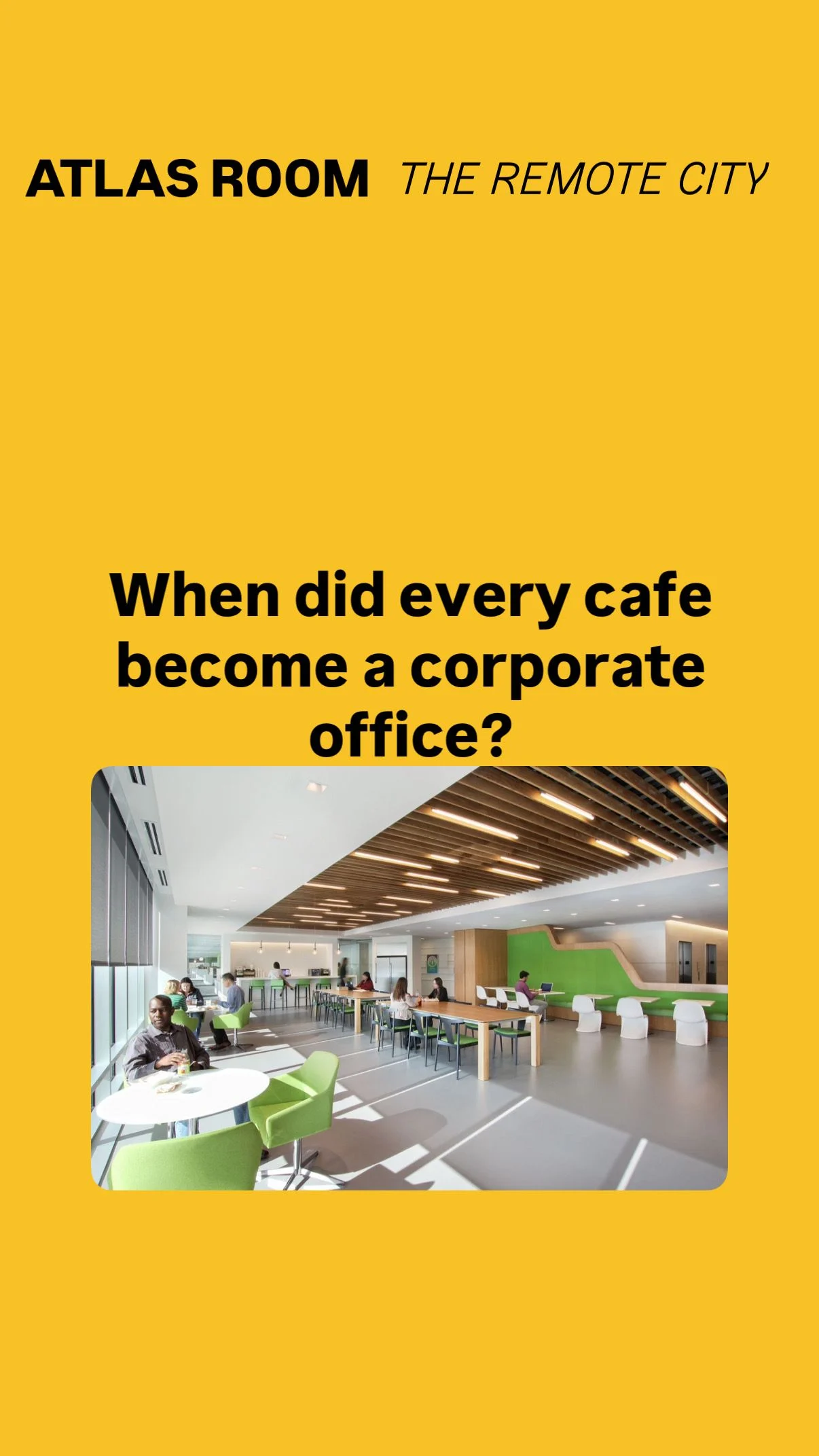
Remember when cafés were for catching up with friends?
Apparently, nobody informed the people on Zoom.
We've all seen it.
You're meeting friends after weeks. Someone cracks a joke. The table erupts in laughter.
And suddenly a voice from the next table goes:
"Guys, can you keep it down? I'm in a meeting."
A meeting.
In a café.
A place literally built for conversation.
The audacity.
Somewhere along the way, public spaces entered a very confusing identity crisis.
The café is now an office.
The park bench is now a workstation.
The library is a meeting room.
And the guy sitting next to you overlooking a lake? He might be closing a deal worth more than your apartment.
Work has escaped the office.
Quietly at first.
Then all at once.
The funny thing is that cities were never designed for this.
For decades, we knew where work happened.
It happened in office buildings.
Business districts.
Corporate campuses.
If you wanted to avoid work, you simply went somewhere else.
Now?
Work follows you everywhere.
Order a cappuccino? Someone's presenting quarterly reports behind you.
Go to a park? Someone's charging their laptop under a tree.
Visit a hill station? Half the tourists are actually working.
And while it's easy to joke about, it's creating a genuinely interesting question.
If public spaces are becoming workplaces, should we start designing them differently?
The funny thing is, we're still treating remote work as a temporary adjustment.
As if one day everyone will suddenly return to the office and cafés can go back to being cafés.
But let's be honest.
That ship has sailed.
Even people who go to the office five days a week don't always work in the office.
They answer emails from airports.
Join calls from cars.
Finish presentations from dining tables.
Review drawings from cafés.
Work has become an activity rather than a destination.
And if that's true, shouldn't our cities start reflecting it?
Because right now, remote workers are borrowing spaces that were never designed for them.
The café becomes a meeting room.
The park bench becomes a workstation.
The library becomes an office extension.
We're improvising.
But maybe it's time to start planning.
Imagine if every neighbourhood had small work hubs within walking distance.
Imagine public parks with shaded seating, charging points and reliable internet.
Imagine community centres that transformed into coworking spaces during the day and social spaces in the evening.
Imagine being able to work close to home without working from home.
Suddenly, the question isn't "Where is your office?"
It's "How far away should work really be?"
For more than a century, city planning assumed that work belonged in one place and life belonged somewhere else.
The office district here.
The residential neighbourhood there.
Connect the two with roads and trains.
Done.
But we're living in a different reality now.
The line between work and life isn't disappearing.
It's blurring.
And whether we like it or not, our cities are blurring with it.
Maybe the future workplace isn't another glass tower downtown.
Maybe it's a network of parks, libraries, cafés, community hubs and neighbourhood workspaces stitched across the city.
Not because we're trying to bring work everywhere.
But because work is already everywhere.
Cities just haven't caught up yet.
Until then, if you're taking a meeting from a café, just remember:
The people laughing around you aren't disturbing your office.
You're sitting in their café.
And perhaps that's the real challenge for cities moving forward.
Not figuring out where people work.
But figuring out how to design places where work and life can comfortably coexist.
Because work has escaped the office.
The question is whether city planning has noticed.